
What should stay in your company after an AI adoption program?
Rolling out AI tools is very different from having a team that thinks about its work with AI built in. The key is how to drive that shift in mindset: how to build a new way of thinking about problems.
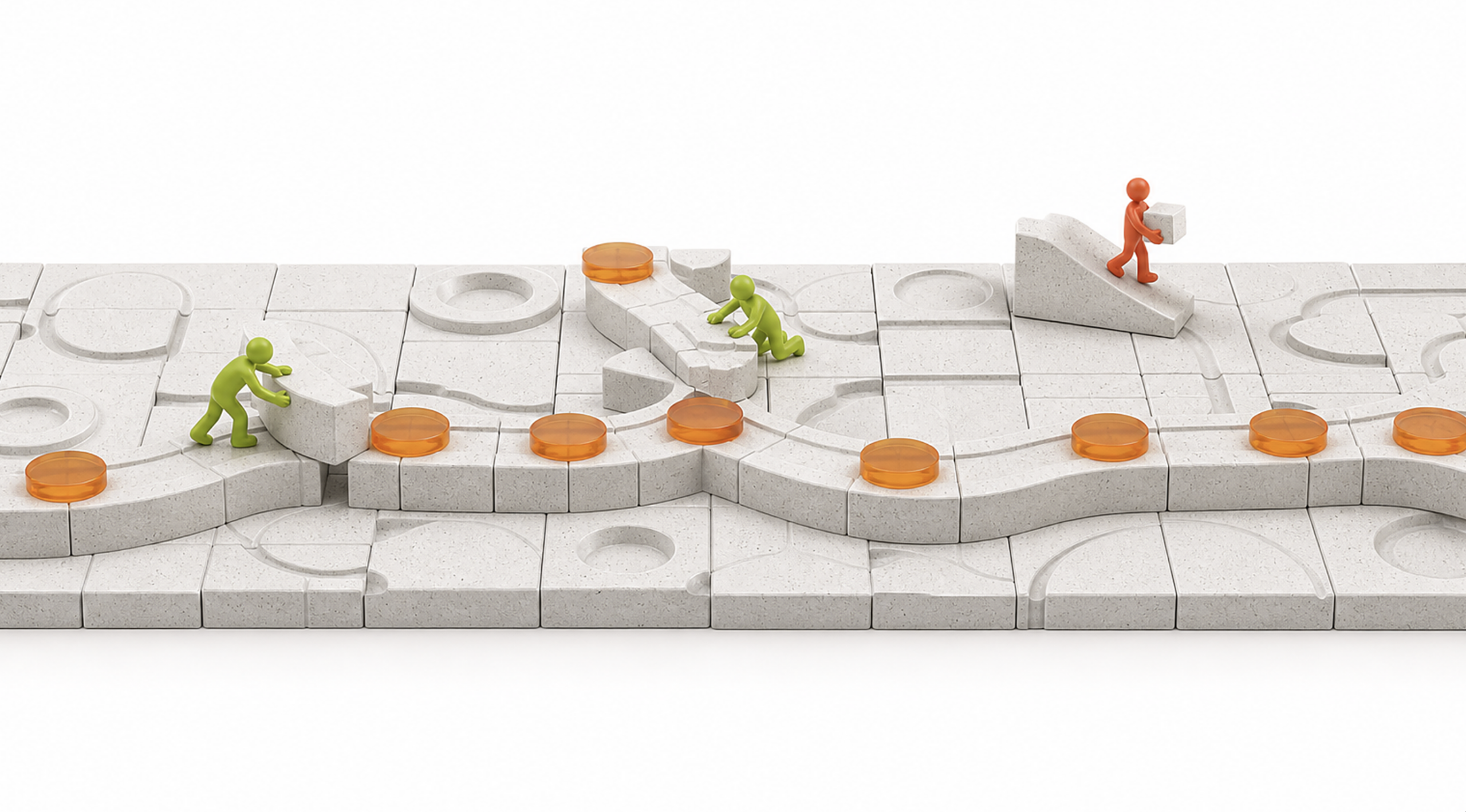
The first thing an AI adoption program should leave behind is a new way of thinking about how to solve problems. With that in place, most of the work is done. What comes next is what a business team can do with AI on its own, without relying on a specialist or the IT department: understand the information flows it uses, the processes involved and the integrations it needs, fix them when something changes, and build the next one.
For six months, an automated flow has been putting together the collections report every Monday. An external vendor built it, it works, and nobody touches it. But no one on the team changed the way they think. The day the bank changes the format of the file it exports, the flow stops working or, worse, keeps running and reads the data wrong. Nobody knows where the logic lives or what would need to change, and the report goes back to being done by hand.
The automation was there. What was missing was knowledge and practice inside the team.
The following-Monday test
There is a simple way to know what an AI project left behind: look at what happens the Monday after the person who built it leaves. Three questions are enough.
1. Can someone on the team explain the flow? What it does, what triggers it, where it gets its data and what to do if it fails.
2. Can someone fix it? When a format, a system or the AI tool it uses changes.
3. Can someone replicate it? Take what they learned and automate another task in their own work.
With three yeses, the project left capability and learning in the team. With a single no, it left a dependency, even if the flow works.
1. Choose a process that teaches
The first process is usually chosen for the hours it can save. There is a second criterion that matters just as much: what it teaches. A good first process is one the person can understand end to end, with visible steps and decisions, and whose logic applies to other tasks.
Reconciling two spreadsheets, for example, teaches how to cross-check data, spot differences and flag when something doesn’t match. The same logic later applies to inventory, invoicing or attendance. A very complex or very specific process may save more hours and leave less learning: only the person who built it can sustain it.
2. Minimum documentation: one page
A manual is too much. One page that anyone on the team can read in five minutes is enough:
- What the flow does and why.
- What triggers it and how often it runs.
- Where it gets its data and where it delivers it.
- Which parts a person reviews before it moves on.
- What to do if it fails and who to notify.
Combined with clear names inside the flow (“download bank statement” instead of “step 7”), that page turns something only its author understands into something the team can sustain. It is best written while the flow is being built, when the reason behind each step is still fresh.
3. From the flow to one’s own role
The clearest sign that capability stayed shows up weeks later: the person who automated one task starts seeing others in their own work. AI becomes a way of working and stops being a project with an end date.
That is why, once a flow is finished, one more conversation is worth having: which other tasks in the same role have the same shape, and which one comes next. Each person improves their own part of the work, becomes more efficient and focuses their time on higher-value tasks.
What changes when capability stays inside
– A new way of thinking about problems. The question stops being which technology to use and becomes how to solve it.
– Changes get solved inside. A new format, a system update or an AI model the vendor retires becomes an adjustment the team makes.
– The cost stops being recurring. The company pays to learn once, instead of paying for every change.
– Adoption spreads. When the rest of the team sees the results, they raise their hand: “I want that too.”
Capability stays with your people.
Frequently asked questions
What is internal AI capability?
It is a business team’s ability to understand, fix and build AI flows on its own, without depending on IT or on a vendor for every change.
What should remain when an AI project ends?
Beyond working flows, people who can explain them, fix them when something changes and use what they learned to automate other tasks in their role.

Co-founder Teamcubation. Follow me on LinkedIn.